
Well it looks nice in the screenshots, and the style of gaming has a strong pedigree, but I have to say that Gravity Surf is pretty boring, clunky, and misses the mark.
This is a disappointment, as it starts off on the right foot. The goal of this title from Synqua Games is to navigate your little spaceship around the game area (which is the same size as your 5th Edition phone's screen – handy that), collecting a set number of fuel cells to complete the level.


Gravity is your main obstacle, pulling your craft to the bottom of the screen. Your engine counters it, and there's more than enough power to nip around the screen. Tilt the craft left and right to change your direction, and feel free to cut the engine and rely on momentum. Imagine the ship in “Asteroids” but rather than be in deep space, be on a planet.
To give you a bit more aid, you have other tokens you can collect to provide an extra life, a protective shield, and the ability to freeze the enemies on the screen for a short time. Yes, you have company, so on top of navigating around the level for fuel, you have the added hurdle of avoiding the enemy ships, lasers and obstacles.
And it's that control and accuracy required that Gravity Surf is missing.
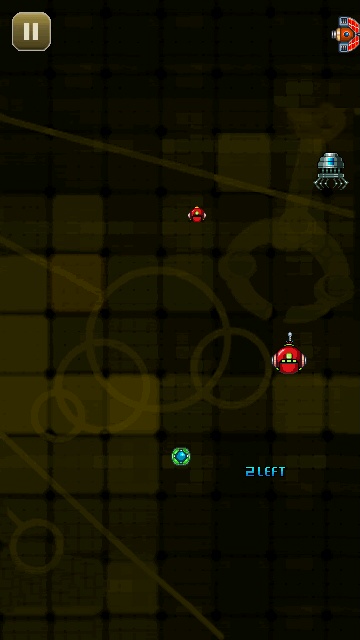
Being on a touch screen device, you don't have the physical buttons that could make this an easy arcade classic. By tapping the centre of the screen you get your straight up and down thrust, and a tap on the left or right hand side tilts the craft to a fixed angle to give you the lateral movement you'll need to navigate the level.
It's just not enough. It might work for some people, but I wanted a finer control on how much I was turning. I couldn't just add a shade of right to the angle of my craft, and this coarseness of controls robs the game of the one thing that could provide it a challenge... accuracy. Think of the split second spins and moves you could do in games like Asteroids or Thrust. And then look at Gravity Surf and you can see exactly what the game lacks.
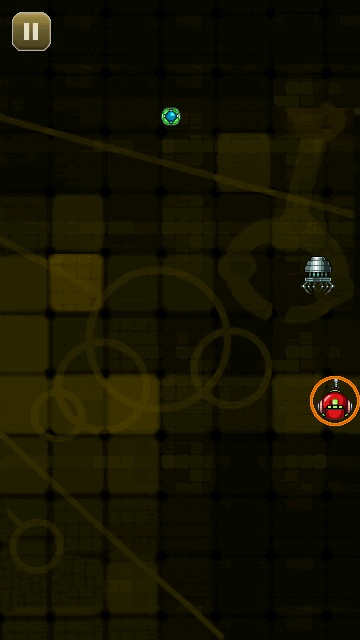
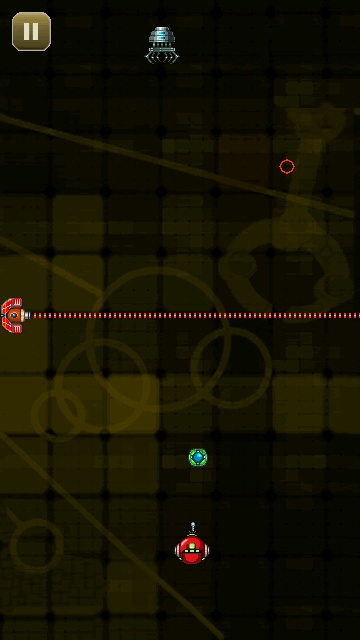
There are ways that this could be altered – a wholesale change of the controls is one option, perhaps incorporating the accelerometers to provide an alternative to tapping one of three areas on the touchscreen. You could then have a much more granular control of your craft, and I think this would improve Gravity Surf no end.
There is a good game here, but it's fighting to get out. I'll be interested to see if Synqua decide to improve Gravity Surf over time, or take the lessons from this title and incorporate them into a sequel. As it is, I can't really recommend Gravity Surf as anything more than a nice distraction to pass the time.
Update May 13th: The developers at Synqua have been in touch to thank us for the rview and the comments on the controls. an updated version of Gravity Surf is now available in the Ovi Store which uses the accelerometer as the main control method. While the granularity of the angle of the ship is still the same as before, the tilting control does provide a much finer control for the user. Given that, the score for the accelerometer version would be higher than the version reviewed here. With a score of 67, Gravity Surf is now worth a look .
-- Ewan Spence, May 2010.